STURP - the Shroud of Turin Research Project
The Science
STURP - the Shroud of Turin Research
Project
In 1978 the Shroud was on public display for the first time since 1933. Over 3
million people passed through the Cathedral of St. John the Baptist to view it
behind bullet proof glass during the three weeks it was on display. Among the
pilgrims who view the Shroud is Karol, Cardinal Woytywa of Poland, shortly to
become Pope John Paul II.
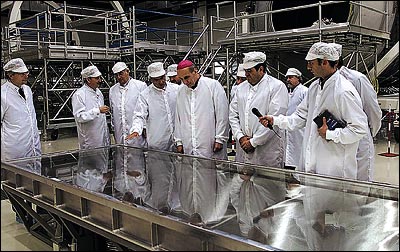
At the end of the exhibition, 40 scientists comprising the Shroud of Turin
Research Project (STURP), were allowed by the Cardinal of Turin to analyze the
Shroud for five continuous days (122 hours) working in shifts around the clock.
The STURP team is composed of scientists from universities, scientific
laboratories, and scientific industries. When the team’s results were published
in 1981, over 150,000 scientific hours had been employed in the research and
analysis.
The team's research continues today.
THE STURP
RESULTS
In 1981 the Shroud of Turin Research Project (STURP) team issued its Final
Report and the following official conclusions:
"No pigments, paints, dyes or stains have been found on the fibrils. X-ray,
fluorescence and microchemistry on the fibrils preclude the possibility of paint
being used as a method for creating the image. Ultra Violet and infrared
evaluation confirm these studies. Computer image enhancement and analysis by a
device known as a VP-8 image analyzer show that the image has unique,
three-dimensional information encoded in it.
Microchemical evaluation has indicated no evidence of any spices, oils, or any
biochemicals known to be produced by the body in life or in death. It is clear
that there has been a direct contact of the Shroud with a body, which explains
certain features such as scourge marks, as well as the blood. However, while
this type of contact might explain some of the features of the torso, it is
totally incapable of explaining the image of the face with the high resolution
that has been amply demonstrated by photography.
The basic problem from a scientific point of view is that some explanations
which might be tenable from a chemical point of view, are precluded by physics.
Contrariwise, certain physical explanations, which may be attractive are
completely precluded by the chemistry.
For an adequate explanation for the image of the Shroud, one must have an
explanation which is scientifically sound, from a physical, chemical, biological
and medical viewpoint. At the present, this type of solution does not appear to
be obtainable by the best efforts of the members of the Shroud Team.
Furthermore, experiments in physics and chemistry with old linen have failed to
reproduce adequately the phenomenon presented by the Shroud of Turin.
The scientific concensus is that the image was produced by something which
resulted in oxidation, dehydration and conjugation of the polysaccharide
structure of the microfibrils of the linen itself. Such changes can be
duplicated in the laboratory by certain chemical and physical processes. A
similar type of change in linen can be obtained by sulfuric acid or heat.
However, there are no chemical or physical methods known which can account for
the totality of the image, nor can any combination of physical, chemical,
biological or medical circumstances explain the image adequately.
Thus, the answer to the question of how the image was produced or what produced
the image remains, now, as it has in the past, a mystery.
We can conclude for now that the Shroud image is that of a real human form of a
scourged, crucified man. It is not the product of an artist. The blood stains
are composed of hemoglobin and also give a positive test for serum albumin.
The image is an ongoing mystery and until further chemical studies are made,
perhaps by this group of scientists, or perhaps by some scientists in the
future, the problem remains unsolved."